Garage Floor Epoxy in Rochester, MN
The garage floor takes the worst beating in the house: road salt all winter, hot tires all summer, oil, antifreeze, dropped tools, and the freeze-thaw working on every crack. Bare concrete loses that fight slowly and dusts the whole time. The full-flake epoxy system is the standard answer — and done right, it is close to a permanent one.
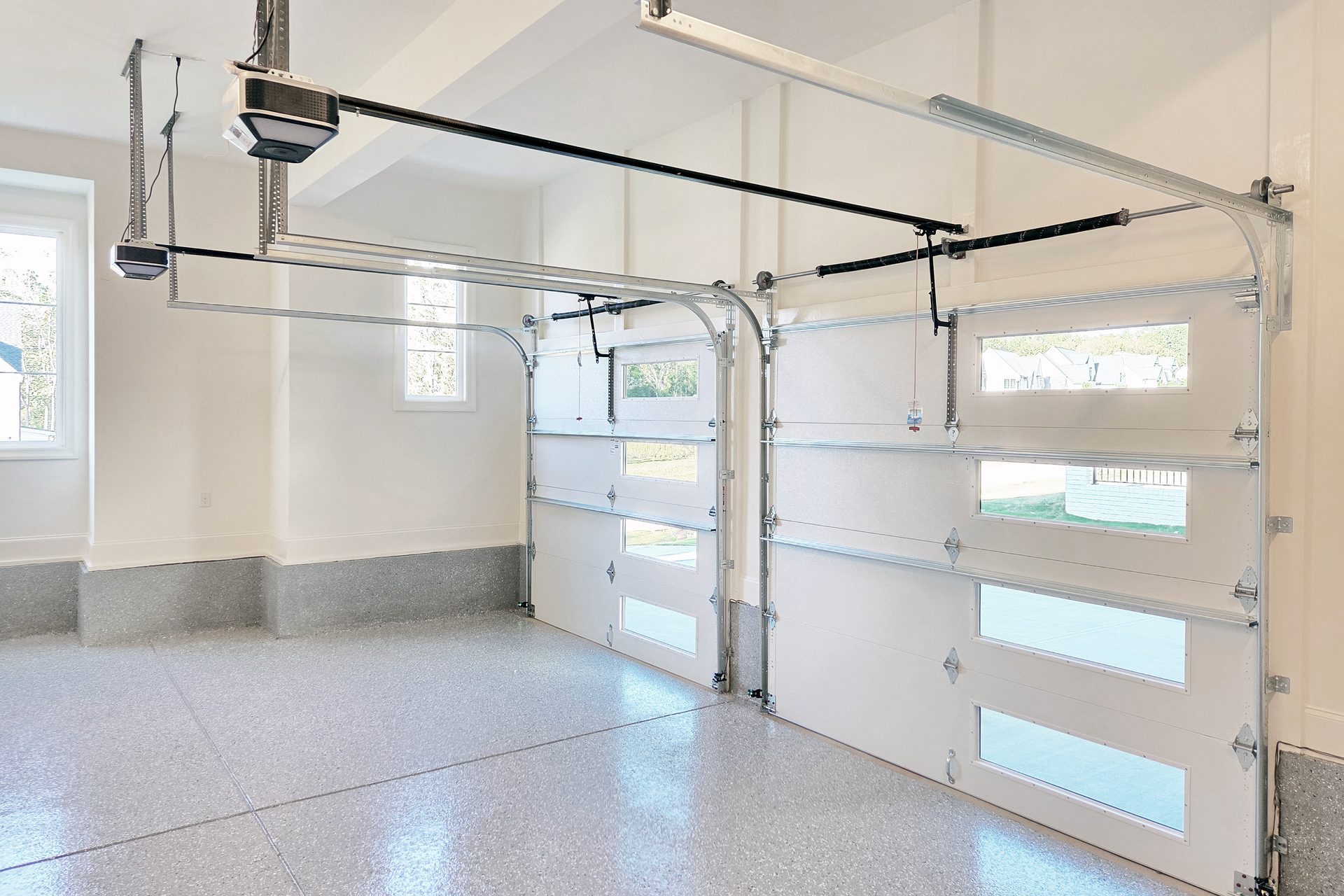
The system is four steps, and the first one decides everything: the slab is diamond-ground so the base coat bonds into the concrete instead of sitting on it. Then the base coat, a full broadcast of vinyl flake until the floor takes no more, and a clear topcoat — polyaspartic on most of our garages, because it cures hard, shrugs off hot tires, and hands the floor back sooner.
Full flake runs $4 to $7 a square foot in the published ranges we bid from — standard blends $4 to $6, premium blends to $7. A standard two-car garage lands at $1,500 to $3,500; one-car garages run about $1,200 to $2,500; three-car garages $3,500 to $6,500. The calculator on our home page runs your garage through the same band.
Before anything is coated, we measure the slab and test its moisture. A slab that pushes vapor will push a coating off with it, so when the test says the slab needs a moisture-mitigating primer, that goes in the written estimate up front — not in a phone call after the floor peels.
Most two-car garages run two days: grind and base on day one, topcoat on day two, foot traffic the day after, cars back on the honest schedule we give you at the estimate — usually several days, longer in a cold snap.
How a Garage Job Runs
The measure comes first: slab measured, moisture tested, old coatings and contamination checked, cracks walked. If the concrete needs repair, you hear about it now — with its own price, typically $300–$800 of added work on a coating job — not after the old floor is already ground.
Coating days are methodical: everything out, slab ground, cracks and spalls filled, base coat down, flake broadcast to refusal, then the clear coat once the base is ready for it. We walk the edges and the door line with you before the job is called done.
Picking the Flake
Flake is a color decision with a practical side: mid-gray and tan blends hide Minnesota winter dirt the longest, darker blends read richer and show dust sooner, and a full broadcast — flake to refusal, not a sprinkle — is what gives the floor its texture, its slip resistance, and its ability to hide the slab's small sins.
Tossing-up between flake and a plainer floor? The solid color page is the honest comparison — it is the same prep and the same base with a simpler top, at $3–$5 a square foot.
How much does an epoxy garage floor cost?
Full flake runs $4–$6 a square foot for standard blends, premium blends to $7. A standard two-car garage lands $1,500–$3,500, one-car garages about $1,200–$2,500, three-car garages $3,500–$6,500. The home-page calculator runs your garage.
How long does a garage floor take?
Most two-car garages run two days of work. Foot traffic follows in about a day; cars wait several days — we give you the number for your system and the season in writing, because rushing a car onto a young floor leaves tire marks for life.
Will it hold up to road salt and winter?
That is exactly what it is built for. The topcoat seals the surface so salt and meltwater sit on the coating instead of soaking into the concrete, and the floor hoses or squeegees clean in spring. Salt eats bare concrete; it does not eat a cured epoxy topcoat.
My garage has cracks. Can it still be coated?
Usually, yes. Cracks are routed, filled, and ground flush as part of prep; control joints are honored, not buried. What matters is whether the slab is still moving — the measure tells us, and if a crack is a structural problem we will say so before selling you a coating over it.
Ready to price your floor? The measure visit is free — and the price comes in writing.