Commercial Epoxy Floors in Rochester, MN
Commercial concrete fails differently than garage concrete: forklift traffic, chemical spills, thermal shock from wash-downs, health-code floors that have to scrub truly clean, and a business that loses money every day the floor is out of service. Commercial epoxy is specified against those facts, not against a color chart.
High-build epoxy runs $4 to $10 a square foot in the professional ranges we bid from, and polyaspartic systems run $5 to $12 — the premium buys speed: a polyaspartic floor can take foot traffic in hours and return a space to service days sooner than a standard build. Big square footage pulls the per-foot number down; chemicals, traffic, and downtime windows pull the system choice up.
The work we do most: warehouses and distribution floors that need to sweep clean and take forklifts, auto and equipment shops that live in oil, restaurant and food-service floors built for wash-down, and retail or showroom floors where the gloss is part of the room. Each gets its own build — slip texture where the floor gets wet, chemical-resistant topcoats where the spills are solvents, cove base where the health inspector looks for it.
Downtime is planned like it matters, because it does: phased sections, weekend and overnight windows, and a written schedule that names when each area comes back into service. The estimate process starts with a walk of the whole space and a moisture survey, not a square-foot guess over the phone.
Every commercial job is priced in writing before it starts — system, prep, phasing, and return-to-service dates named in the document.
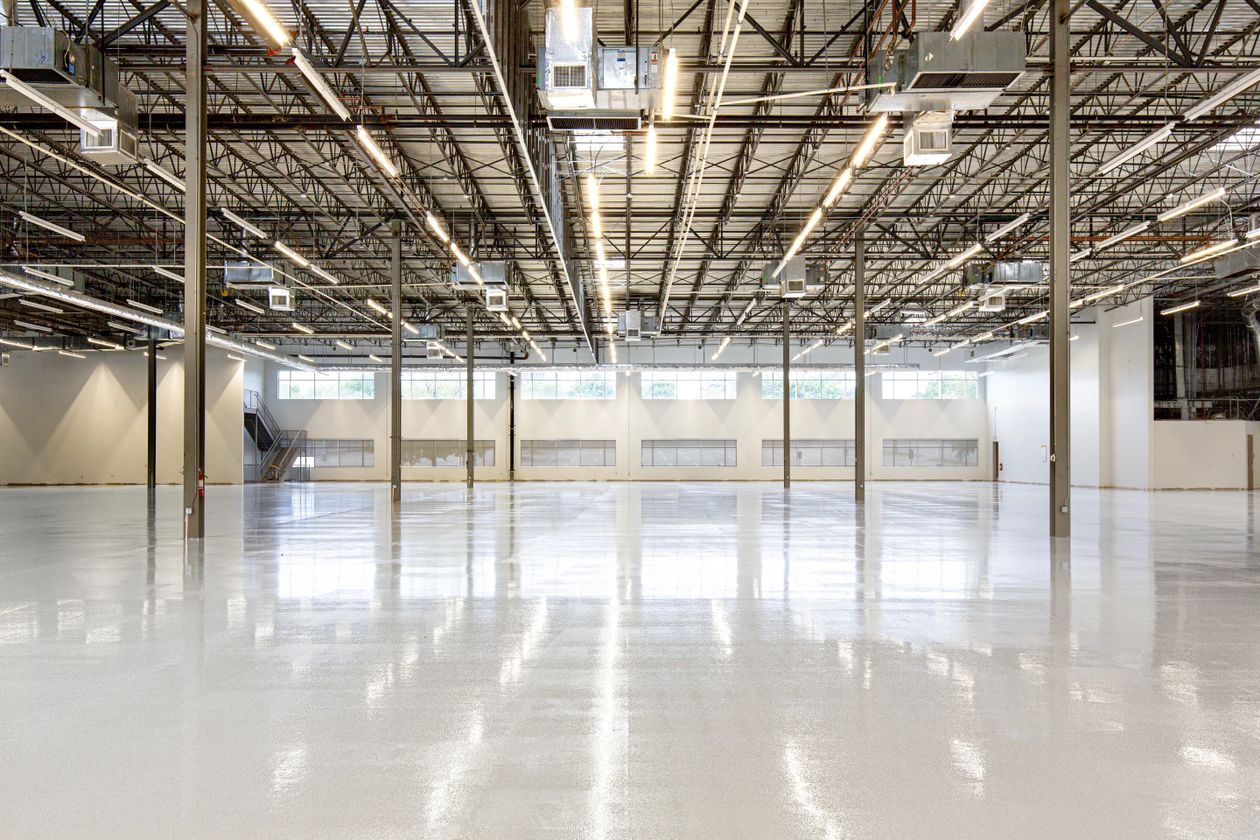
How a Commercial Job Runs
The walk-through comes first: traffic patterns, chemical exposure, drains and slopes, the existing coating's condition, and the hours the space can actually give up. Moisture is tested at several points — big slabs vary — and the system is specified from those facts.
Phasing keeps you open: the floor is sectioned so part of the operation always runs, coatings go down in the windows we agreed, and each section returns to service on the date in the written schedule. If a phase slips, you hear it from us before you discover it.
Specifying the System
The questions that decide a commercial floor: what rolls on it, what spills on it, how fast it has to come back, and who inspects it. Forklift lanes want high-build epoxy with real abrasion depth; food service wants a seamless, scrubbable surface with cove base; a shop that cannot close wants polyaspartic speed at the $5–$12 band.
We will also tell you when epoxy is the wrong answer — a slab with active moisture failure or structural movement needs its concrete fixed first, and a written 'not yet' costs you nothing at the estimate.
How much do commercial epoxy floors cost?
High-build epoxy runs $4–$10 a square foot and polyaspartic systems $5–$12, with big square footage pulling the per-foot number down. The home-page calculator's commercial band runs your footage at the planning level; the written estimate prices your actual space.
Can you work without closing us?
Usually, yes — phased sections and off-hours windows are the standard commercial pattern. Some processes (grinding near food service, for one) have real constraints, and we name them in the schedule instead of discovering them together mid-job.
How long does a commercial floor last?
Specified and prepped right, a high-build commercial floor is a 10-plus-year surface under its rated traffic — with the honest caveat that forklift steel wheels and dragged pallets write their own history on any floor. The topcoat is renewable: a re-coat at mid-life costs a fraction of the original build.
Do you handle drains, slopes, and cove base?
Yes. Drains are masked and detailed, slopes are preserved (a floor that ponds where it used to drain is a defect, and we check for it), and cove base is installed where wash-down or health code calls for a seamless wall junction.
Ready to price your floor? The measure visit is free — and the price comes in writing.